1. When Parking Lot Markings Wear Out, First Determine How Much Area Actually Needs Attention
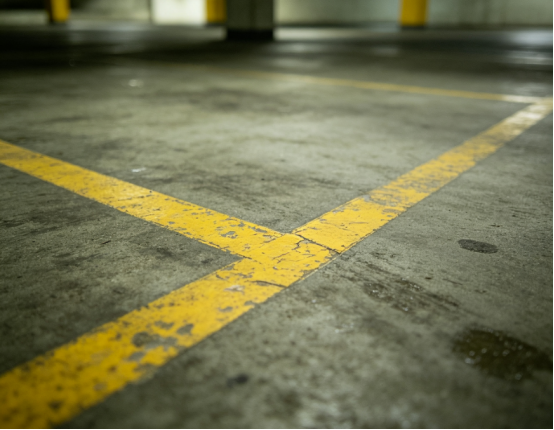
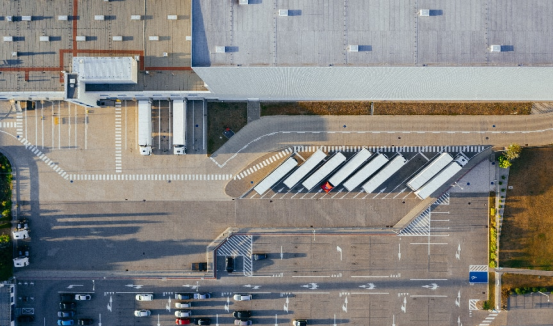
After parking lots, factories, logistics parks, and warehouses have been in use for a period of time, localized road marking wear is relatively common. Sometimes only the boundary lines of several parking spaces begin to fade. In other cases, traffic lane markings may become noticeably worn after repeated vehicle movement. Changes in site use may also require new parking spaces, pedestrian routes, or logistics areas.
When this happens, it is not always necessary to immediately repaint the entire parking lot or factory area. The first step is to inspect the overall condition of the existing markings. If most of the markings remain clearly visible and only a few locations are worn, localized maintenance may be more suitable for the actual requirements. If the existing markings have faded over a large area or the entire site needs to be replanned, complete remarking can then be considered.
For facility managers, first estimating the number of parking spaces that need to be repainted, the total line length, and the approximate area can help determine the amount of material required and the appropriate construction method.
2. Small-Area Facility Marking and Large Road Projects Require Different Approaches
Road marking on highways or major urban roads usually needs to consider long-distance continuous operation and the efficiency of large-scale mechanized equipment, while the actual workload in parking lots, factories, and warehouses is usually much smaller. If only a dozen parking spaces need to be repainted, bringing large equipment and a complete construction team to the site may not necessarily be economical.
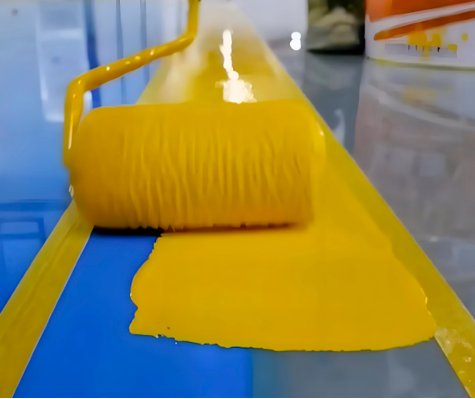
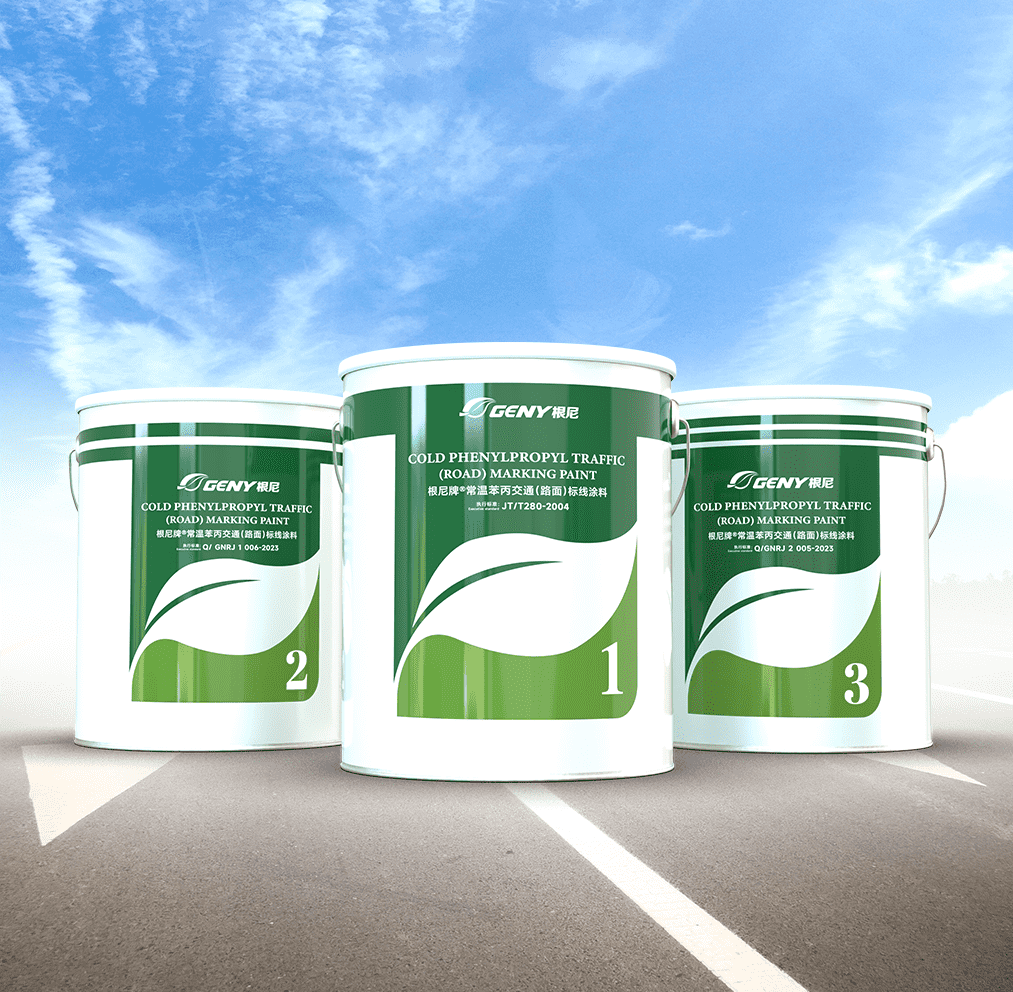
Therefore, small-area construction places more emphasis on whether materials are easy to prepare, whether equipment is easy to operate, and whether construction organization is flexible. Facility marking coatings can be selected with parking lots, factories, schools, hospitals, logistics parks, and other scenarios in mind, while simple marking equipment can meet the needs of certain smaller road marking projects. The official English website describes GENY Traffic Safety as focusing on economical marking coatings and simple marking equipment for parking lots, logistics parks, and other facility scenarios.
This difference does not mean that one construction method is more professional than another. Different project sizes simply require different solutions. A highway project covering dozens of kilometers focuses on continuous operating capacity, while a dozen parking spaces place more emphasis on whether localized maintenance can be completed in a relatively simple way.
3. Before Repainting Lines Yourself, Pavement Condition and Measurement Are More Important Than “How to Paint”
Small-area road marking may appear relatively simple, so many facility managers focus mainly on what type of paint to purchase and how to apply it. However, once construction actually begins, preparation before application often directly affects the final result.
For example, parking space dimensions should be determined in advance, adjacent parking spaces should remain relatively consistent, existing lines may need to be treated, and the construction area should be checked for dust, moisture, oil, or other contaminants. If measurement and positioning are not completed in advance and construction is carried out only by visual judgment, the final markings may be misaligned or have uneven edges even if there is no problem with the marking material itself.
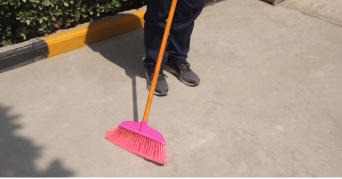
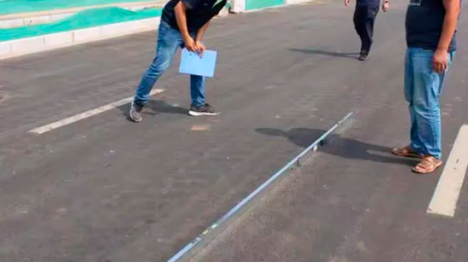

Therefore, although small-area construction does not require the same complex organization as large road projects, basic pavement cleaning, measurement, positioning, and construction preparation should still not be ignored.
4. Parking Lot and Factory Marking Colors Also Serve Different Functions
Facility markings are not limited to ordinary parking space lines. Factories and logistics parks may also contain vehicle lanes, pedestrian routes, cargo areas, and other functional zones, while parking lots may involve ordinary parking spaces, designated parking areas, no-parking zones, and other areas. Therefore, marking colors not only affect the overall visual appearance of the site but can also help identify different functional areas.
When replanning a site, the appropriate marking format should be determined according to actual use and applicable requirements rather than selecting colors entirely according to personal preference. For factories, industrial parks, and parking lots that operate over a long period of time, clear zoning can help vehicles and personnel identify different functional areas more intuitively and can also support daily site management.
If the original site layout is still suitable and only some marking colors have faded or worn, restoring the affected areas according to the original layout is usually simpler. If the use of the site has changed significantly, the area can first be replanned before new markings are applied.
5. Regular Local Maintenance May Be More Flexible Than Complete Remarking Every Few Years
Wear in parking lot and factory markings during long-term use does not mean that the entire area needs to be repainted every time. Areas frequently driven over by vehicles can be inspected regularly, and localized maintenance can be carried out while the worn area is still relatively small. In this way, the area that needs to be treated each time remains limited, making material use and construction organization easier to control.
If maintenance is delayed for a long time until large numbers of parking spaces, traffic lanes, and functional areas can no longer be clearly identified, both the construction area and organizational costs may increase. Therefore, for parking lots, factories, schools, hospitals, warehouses, logistics parks, and other facilities used over long periods of time, road marking inspection can be incorporated into routine site maintenance.
The real purpose of small-area facility marking is not to determine how many kilometers can be completed in one day, but to restore the areas that need maintenance conveniently and at a reasonable cost. By selecting appropriate materials and construction tools according to the actual workload, and by carrying out proper measurement and pavement preparation, many localized marking problems can be addressed without waiting until the entire site needs to be repainted.