1. Factory Traffic Environments Are Different from Ordinary Parking Lots
Factories, warehouses, and logistics parks often have employees walking, forklifts operating, trucks moving, and goods being loaded or unloaded within the same site. Compared with an ordinary parking lot, the traffic environment inside an industrial facility can be more complex.
During facility planning, Factory Floor Markings can be used to define vehicle routes, pedestrian routes, and different functional areas according to the actual production and logistics layout. Clear markings can help people entering the facility identify how different spaces are intended to be used.
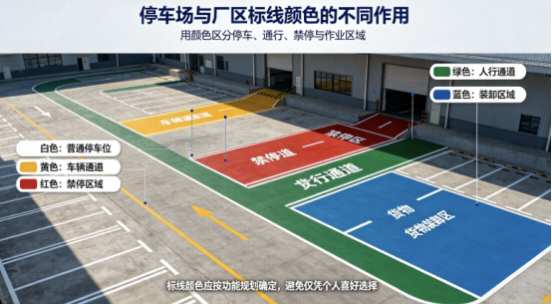
2. Markings Can Create Clear Boundaries Between Functional Areas
Facility marking involves more than drawing several straight lines. Depending on the site, markings may be used for parking spaces, vehicle routes, pedestrian walkways, storage areas, and other functional zones.
Before application, the actual facility layout should first be measured so that the position and dimensions of each area can be determined. For smaller marking projects, masking tape and other simple methods may also be used to define the application boundaries and create cleaner line edges.
3. Surface Preparation Is Also Important for Facility Marking
Factory floors may contain dust, oil, and other contaminants produced by long-term vehicle and industrial activity. Before Facility Marking Application, the actual surface condition should therefore be inspected and the application area cleaned as necessary.
Even when the project area is small, these preparation steps should not be ignored. Especially for localized maintenance, spending additional time cleaning the surface and confirming dimensions before application can be easier than trying to correct the markings afterward.
4. Marking Layout Should Reflect How the Facility Is Actually Used
Factories and warehouses have different layouts, so one facility marking plan cannot simply be copied from another project. Contractors and facility managers should consider where logistics vehicles enter, where goods are loaded and unloaded, where employees normally walk, and which areas should restrict vehicle access.
Facilities that have already been operating for some time can also adjust existing markings according to actual usage. If pedestrian and vehicle routes frequently cross at a particular location, for example, the route layout can be reviewed. The purpose of facility marking is not to make the floor visually complicated, but to create a clearer spatial organization.
5. Localized Wear Can Be Maintained as Needed
Facility markings are continuously exposed to pedestrians, forklifts, and vehicle traffic, so high-use areas may wear earlier than other locations. If the overall layout is still suitable and only certain lines have faded, the entire facility does not necessarily need to be remarked.
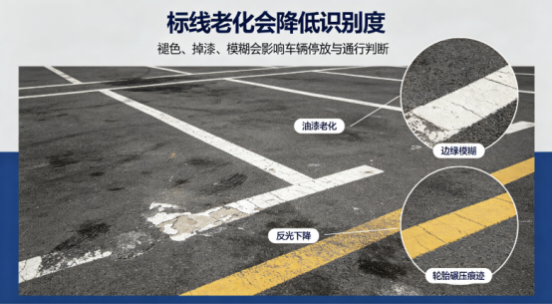
GENY Traffic Safetyfocuses on parking lots, logistics parks, and other small-volume facility marking applications, providing economical marking coatings and simple marking equipment. For factories and warehouses requiring long-term maintenance, periodic inspection and localized repair can help keep markings clear over time.