Is it better for road marking paint to be as white as possible?
Many people, when choosing road marking paint, immediately think: the whiter and brighter it is, the better. Some even believe that "blindingly white" indicates high quality. In fact, this is a very common misconception.
A truly durable and qualified road marking paint isn't judged by how "white" it is, but by how "stable" it is. Today, we'll clearly explain how to instantly assess the quality of marking paint at a glance.
01 Is it really true that the brighter white the road marking paint, the better?
Answer: No! In fact, overly white paint carries higher risks.
Does whiter road marking paint mean better quality? ❌
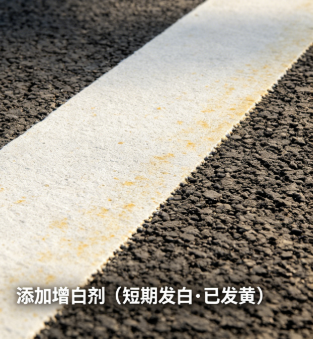
Many low-cost paints add large amounts of optical brighteners and cheap colorants to enhance their appearance. While they appear exceptionally white at first, they quickly turn yellow, gray, or powdery when exposed to sunlight, significantly reducing their lifespan.
Just finished: so bright and radiant, looks amazing.
After two months of exposure: rapid oxidation, yellowing and darkening, powder loss and peeling.
This kind of white is called "short-term white"—it looks good but isn't durable.
What does the white of a good road marking paint look like? ✅
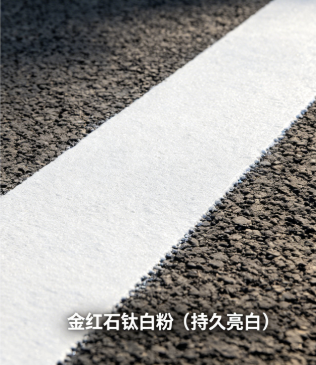
High-quality marking paint, without relying on whitening agents to enhance brightness.
It is achieved through the use of high-purity rutile titanium dioxide powder for its natural coloring effect.
✅ Purely white, without being dazzling
✅ Does not turn yellow even after exposure to sunlight, and does not become dim even after prolonged exposure.
✅ Strong adhesion, resistant to wear and does not peel off
Translation: Attractive appearance is temporary, while durability is long-lasting.
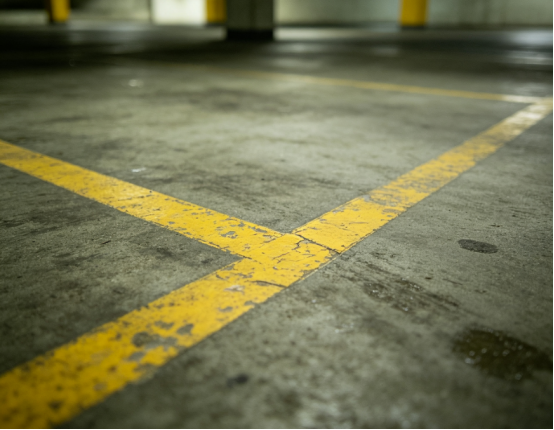
The yellow line also has its standards.
It's not the darker the better. Instead, it should be a bright, eye-catching color that is resistant to aging and does not turn into orange or yellowish-brown.
In simple terms: Looks don't equal functionality; lasting whiteness and lasting brightness are what truly make something great.
02 No need for testing! 5 methods for visually judging the quality of paint lines!
Check the covering ability: Can it completely cover the ground after one application?
Good paint: After one coat, the surface is completely covered without showing any exposed areas, and the color is uniform without any streaking.
Poor finish: Two coats applied resulted in a dull, grayish appearance and a weak color.
Poor covering ability = Less powder and more fillers, which will inevitably cause loss later.
Check the drying speed: If the drying is stable, it means there won't be any dust sticking to it.
Good paint: Dries quickly, does not stick to the surface, and does not get stained by sand or dust.
Poor paint: It doesn't dry for half a day, and once you touch it, it peels off; once you press it, it gets damaged.
No matter how well the construction is done, if it is done slowly, it is still a waste of effort.
Check the adhesion: It is considered qualified only if it cannot be removed after drying completely.
Whether the markings are good or not doesn't depend on whether they are white or not on the surface; it all depends on how firmly they grip the ground.
Good paint: After drying, it firmly adheres to the road surface and cannot be scraped off or pulled away.
Poor paint: Even when dry, it looks like a layer of skin. With just a gentle tap, the entire piece comes off.
Check the weather resistance: The true test comes after exposure to the sun.
The new line doesn't show its quality at first. You have to use it for a while to see the difference.
Good paint: Resistant to long-term exposure to sunlight and rain, it won't turn yellow or flake off.
Poor paint: It starts to turn yellow, lose its luster and become completely unrecognizable within just two to three months.
Check the toughness of the paint film: it should not be brittle, cracked or broken.
Good markers should be tough and not necessarily extremely hard.
Good paint: It won't crack under heavy pressure and won't become brittle at low temperatures.
Poor paint: Once dry, it becomes brittle and will crack when pressed and break when pried.
03 When buying paint, 3 "expert questions"
What type is titanium dioxide?
Gold hematite type > Rutile type (Hematite is more resistant to sunlight and does not turn yellow)
What level of adhesion / coverage can be achieved?
High solid content, strong coverage, low usage, more durable.
Does it comply with the national standard?

Room temperature paint in accordance with JT/T 280
Hot-melt paint in accordance with JT/T 280
Water-based paint is evaluated based on environmental protection and wear resistance indicators.
Don't compromise on quality for the sake of a temporary appearance of whiteness, as it will lead to frequent rework.
The marking paint should, instead of being overly white, be:
✅ No yellowing ✅ No peeling ✅ No flaking ✅ Long-lasting durability
A good project begins with a good line. Follow us to learn construction avoidance tips and avoid unnecessary detours in your projects!